


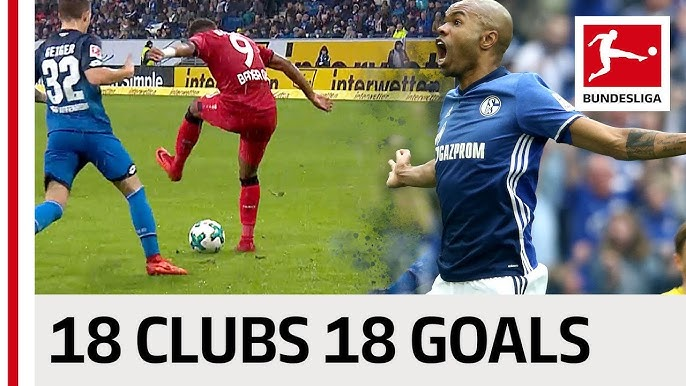
The 2017/2018 Bundesliga season averaged 2.79 goals per game, with the division’s leading clubs driving a large share of those numbers. For bettors targeting high‑scoring outcomes, understanding how each big side attacked, defended, and managed risk mattered as much as knowing the raw goal stats because style dictated not only how often they scored, but also how often matches became wide open.
Why Linking Playing Style to Over Bets Makes Sense
Goals arise from a mix of tactical intent, technical quality, and game state rather than from form labels alone. Top clubs in 2017/2018—headed by Bayern Munich and other European contenders—typically played on the front foot, creating more attacks and, therefore, more chances for totals to clear common lines around 2.5 goals. However, the way they pressed, defended leads, and rotated players created different patterns of risk for over‑backers.
By comparing styles instead of just ranking teams by goals scored, bettors can see why some “big team” fixtures consistently pushed scores high while others often stalled at routine wins. A side that presses high and leaves space behind encourages end‑to‑end contests; a possession‑heavy, control‑oriented team might win comfortably yet keep the overall scoreline relatively contained. That difference in approach directly affects the probability of totals being exceeded, particularly when combined with the opponent’s style.
The 2017/2018 Goal Environment Around the Top Clubs
Across 306 matches, the league’s 855 goals reflected an environment where high‑scoring games were common rather than exceptional. The leading clubs contributed disproportionately to that tally, both by attacking aggressively and by forcing opponents into stretched game states when chasing deficits. Statistics tables for over/under 2.5 goals show that, in general, Bundesliga teams have historically posted high “over” percentages, with sides like Bayern, Leipzig, and Hoffenheim frequently associated with matches that clear the 2.5 line.
For a totals bettor, this context matters because it sets a baseline: in a league where overs already hit at a high rate, the question becomes which big‑team fixtures push that rate even higher and which match‑ups actually pull it back toward more moderate goal counts. Big‑team style characteristics—press intensity, back‑line risk, and how they handle leads—help explain those deviations from the overall average.
Comparing Attacking Intent and Pressing Intensity
Among the major Bundesliga sides, you can broadly distinguish between high‑pressing, vertical teams and more control‑oriented ones. High‑pressing clubs look to win the ball quickly in advanced zones, compressing the pitch and increasing the frequency of transitional moments that often lead to goals. In 2017/2018, tactical trends favored aggressive pressing shapes, with many teams using structures around 4‑2‑3‑1 or similar setups to support fast attacks.
This approach raises both their own scoring potential and their vulnerability to quick counters when the press is broken. For bettors, that dual effect is what makes high‑press sides particularly attractive for over markets: they generate volume and quality of chances at both ends when games are competitive. In contrast, a top team that presses selectively but prioritizes positional security may still win comfortably while reducing the opponent’s opportunities, producing more clean, controlled victories that land just on or slightly above common goal lines but rarely explode into chaotic scorelines.
Styles, Goals, and A Simple Comparison Table
To make the link between style and totals clearer, consider a simplified comparison of typical big‑team traits that influence high‑score probabilities:
| Feature | High‑Press, Vertical Big Side | Control‑Oriented Big Side |
| Off‑ball behavior | Aggressive pressing, frequent ball recoveries high up | Structured mid‑block, prioritize shape over constant pressure |
| Attacking pattern | Fast transitions, early balls into the box | Longer possessions, probing build‑up |
| Risk when leading | Often keep attacking, chase extra goals | More willing to slow tempo and control |
| Typical impact on totals | Increases chance of end‑to‑end games and high scores | Supports comfortable wins but fewer wild scorelines |
In practice, this table signals that not all big‑team fixtures should be treated identically for over markets. When two high‑press sides meet, the risk of chaotic transitions and multi‑goal swings goes up. When a dominant but control‑oriented favorite hosts a cautious underdog, an over 2.5 might still land, but the distribution leans more toward one‑sided 2–0 or 3–0 outcomes, with fewer paths to extreme totals like 4–3.
Using a Sports Betting Service to Apply Style Insights
Turning these stylistic patterns into actual bets requires bridging the gap between tactical understanding and the markets offered by your bookmaker. Under conditions where you have a clear read on how a 2017/2018 big‑team match is likely to flow—for example, a clash between a high‑press giant and a mid‑table side that counters aggressively—you still need to see how that intuition compares to available goal lines and prices. To manage that step efficiently, many bettors channeled their analysis into a single online betting site where they could quickly scan over/under markets, alternative goal lines, and related props before kickoff. In setups where the interface grouped Bundesliga totals clearly and allowed fast adjustment of stakes, bettors could align their conviction about stylistic match‑ups with specific markets—over 2.5, over 3.0, team totals—while also keeping an eye on whether those prices had drifted enough to justify action, with ufabet often serving as one of several reference points when checking whether the offered goal lines matched their expectations.
How Opponent Styles Interact With Big‑Team Profiles
A big team’s style does not exist in isolation; the opponent’s approach heavily shapes the final picture. Against weaker sides that park deep and attack rarely, a dominant club may produce a steady stream of chances but concede little, leading to frequent 2–0 or 3–0 scorelines where the over 2.5 is still viable but 3.5 becomes more of a stretch. Against mid‑table innovators who press or counter aggressively, the favorite may be drawn into a more open contest with both teams creating high‑quality opportunities.
For totals bettors, this interaction matters because it changes the balance between “controlled dominance” and “mutual risk.” Matches where both sides embrace risk—one through constant pressure, the other through fast transitions—have more pathways to very high scores. Matches where only the big side takes the initiative, while the underdog primarily survives, still provide decent over potential but with fewer scenarios that explode into 5–6 goals unless the favorite is particularly ruthless on the day.
Avoiding Overreliance on Reputation Without Numbers
Reputation often lags actual performance. A club remembered as free‑scoring might be going through a tactical shift, a coaching change, or a squad transition that tempers the goal output, even in a season as open as 2017/2018. Conversely, a side seen as solid and conservative might have quietly increased its pressing intensity or introduced more offensive patterns, pushing its matches toward higher totals.
Data from over/under tables and scoring statistics reveals whether high‑goal narratives are backed by consistent outcomes. For bettors, comparing perceived style with numbers from that specific season helps avoid autopilot decisions like “big team at home equals auto over.” If the stats show a trend of professional but restrained wins, or if a previously wild pressing side has tightened up defensively, the smarter play may be to downgrade over stakes or skip the market entirely despite the club’s attacking reputation.
Cross‑Checking Totals Logic in a Broader Gambling Context
Even with a strong understanding of styles and goal tendencies, the presence of other gambling options can dilute focus. When your betting account also offers parlays, other leagues, or non‑football products, it becomes easy to treat over markets on big Bundesliga matches as just one more item on a long betting list. To keep the link between style and totals clear, it helps to treat high‑goal bets as deliberate, researched positions rather than casual add‑ons to accumulate tickets.
In environments where football sits alongside other games—including those labeled under a broader casino online banner—disciplined bettors often separate their carefully analyzed Bundesliga totals from unrelated bets. That might mean setting a specific budget for league goal markets and declining to roll winnings or losses into non‑football activity, even when the same account makes switching between them convenient. By preserving that separation, bettors ensure that their judgments about big‑team styles and high‑score probabilities stand on their own, instead of being blurred into broader gambling swings.
Summary
Comparing the playing styles of major Bundesliga teams in 2017/2018 offers more than tactical curiosity; it directly informs how often their matches were likely to clear common goal lines. In a league that averaged 2.79 goals per game, high‑press, vertical big sides tended to generate more volatile, high‑scoring contests, while control‑oriented giants often produced comfortable but more contained victories. For totals bettors, the edge comes from matching these stylistic profiles with opponent approaches and season‑specific data rather than relying solely on reputation, then translating that understanding into carefully chosen over markets on a dedicated betting site while keeping those decisions separate from unrelated gambling activity.
